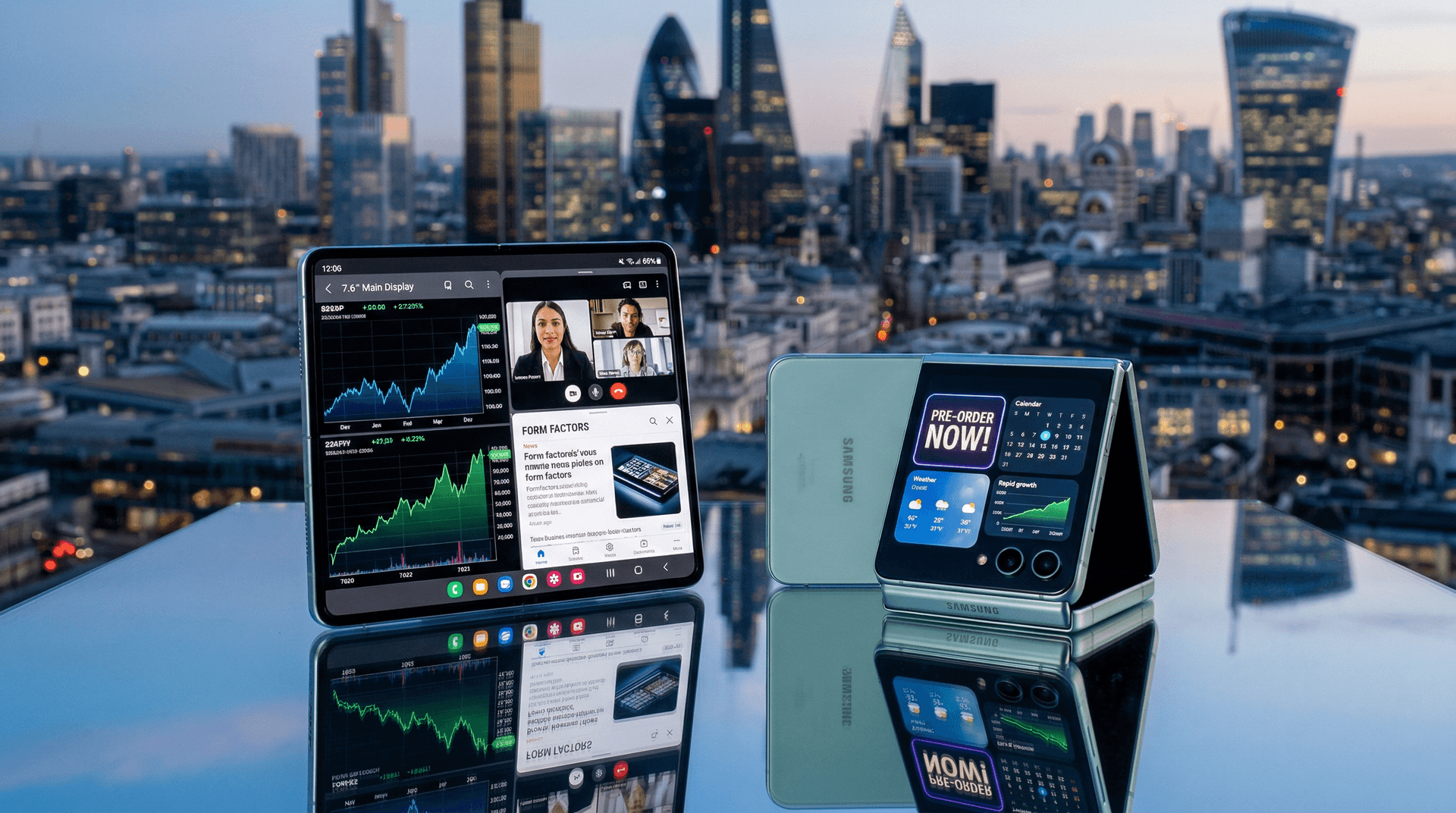
Massive Demand Highlights Foldables' Rising Popularity
In a strong indicator of the maturing foldable smartphone market, Samsung Electronics announced on August 2, 2023, that pre-orders for the Galaxy Z Fold5 and Galaxy Z Flip5 have exceeded expectations. According to reports from Samsung's Korean division, the combined pre-orders for these two devices in South Korea alone topped 260,000 units within the first four days of availability, marking a 50% increase over the Galaxy Z Fold4 and Flip4 from the previous year. This news comes just days after the official unveiling at the Galaxy Unpacked event on July 26, 2023, in Seoul, where Samsung positioned these handsets as the pinnacle of mobile innovation.
The pre-order frenzy isn't limited to Samsung's home market. Early indicators from the US, Europe, and other regions suggest similar enthusiasm, with carriers like Verizon, AT&T, and T-Mobile in the United States reporting high sign-up rates. Samsung has teased global rollouts starting August 11, 2023, which could push sales even higher. Analysts attribute this success to iterative improvements in design, performance, and usability, addressing key pain points from earlier generations.
A Closer Look at the Galaxy Z Fold5: The Productivity Powerhouse
The Galaxy Z Fold5 builds on the foundation laid by its predecessors, offering a more refined foldable experience. Measuring just 6.1mm thick when unfolded and weighing 253 grams, it's Samsung's thinnest and lightest Fold yet—10 grams lighter than the Fold4. The star of the show is the 7.6-inch Dynamic AMOLED 2X main display with a 120Hz refresh rate, under-display camera for a seamless viewing experience, and peak brightness of 1,750 nits.
Powering the device is the Snapdragon 8 Gen 2 for Galaxy chipset, promising up to 23% better multi-core performance and enhanced graphics capabilities compared to the previous Snapdragon 8+ Gen 1. It ships with 12GB of RAM and storage options of 256GB, 512GB, or 1TB. Battery life sees a modest bump with a 4,400mAh cell supporting 25W wired, 15W wireless, and 4.5W reverse wireless charging.
Key upgrades include the new Flex Hinge, allowing the Fold5 to fold completely flat without a visible gap, improving durability with IPX8 water resistance (upgraded from IPX8 only). The rear camera array remains a 50MP main sensor, 12MP ultrawide, and 10MP telephoto with 3x optical zoom, while the cover screen expands to 6.2 inches for better usability when closed.
Samsung has also integrated advanced AI features via One UI 5.1.1 based on Android 13, including Flex Mode enhancements for hands-free video calls and object-erasing tools in the Gallery app. Multi-tasking gets a boost with up to three apps running simultaneously on the inner screen.
Galaxy Z Flip5: Compact Style Meets Expanded Functionality
For those preferring a clamshell form factor, the Galaxy Z Flip5 delivers style and substance. It sports a larger 3.4-inch Super AMOLED cover screen—26% bigger than the Flip4's—enabling full app support, widgets, and even gaming without unfolding. The main 6.7-inch Dynamic AMOLED 2X display retains its 120Hz smoothness and vibrant colors.
Sharing the same Snapdragon 8 Gen 2 powerhouse, the Flip5 offers configurations of 8GB/256GB or 8GB/512GB. The 3,700mAh battery supports the same charging suite as the Fold5, with real-world tests showing all-day endurance for moderate use.
Camera tweaks include a 12MP main and ultrawide setup with improved low-light performance thanks to pixel-binning tech. The Flex Hinge here allows customizable angles from 45 to 115 degrees, perfect for selfies, vlogs, or desk stands. Customization options abound, with new FlexWindow covers and personalization via Good Lock modules.
What’s Driving the Pre-Order Surge?
Several factors contribute to this record demand. First, pricing remains aggressive: The Fold5 starts at $1,799 for 256GB, while the Flip5 is $999—unchanged from last year, making them more accessible amid economic pressures. Trade-in deals offering up to $1,000 off have sweetened the pot.
Second, foldables are shedding their novelty status. Global shipments of foldable phones grew 64% year-over-year in Q2 2023, per Counterpoint Research, with Samsung holding 73% market share. Competitors like Huawei's Pocket series and Motorola's Razr 40 Ultra have raised the bar, but Samsung's ecosystem integration—seamless pairing with Galaxy Watches, Buds, and Tabs—keeps it ahead.
Third, software longevity: Seven years of OS and security updates assure buyers of future-proofing, a rarity in Android land.
Market Implications and Competition
This pre-order success signals foldables transitioning from niche to mainstream. Samsung aims for 20 million units shipped in 2023, up from 10 million in 2022. However, challenges remain: High prices limit mass adoption, and durability concerns linger despite improvements (Samsung claims 200,000 folds tested).
Rivals are circling. Google's Pixel Fold, launched in May 2023, impressed with its Tensor G2 and superior cameras but faltered on battery. Oppo's Find N2 Flip gained traction in Europe. Emerging tri-fold concepts from Huawei and Vivo hint at the next evolution.
In wearables announced alongside, the Galaxy Watch6 series with improved Exynos W930 chips and dual-band GPS also saw strong interest, bundling well with the phones.
Looking Ahead: Foldables' Future Unfolds
As shipments begin August 11, real-world reviews will be crucial. Early hands-on from Unpacked praised the slimmer profiles and brighter screens, but hinge creaks and crease visibility need scrutiny.
Samsung's dominance positions it to lead the foldable charge into 2024, potentially with under-display cameras fully realized and AI-driven multitasking. For consumers, this means more choices in form factors blending phone, tablet, and laptop utility.
The record pre-orders aren't just numbers—they're a vote of confidence in foldables reshaping mobile computing. Stay tuned as Latico News covers the launch and beyond.
Word count: 912