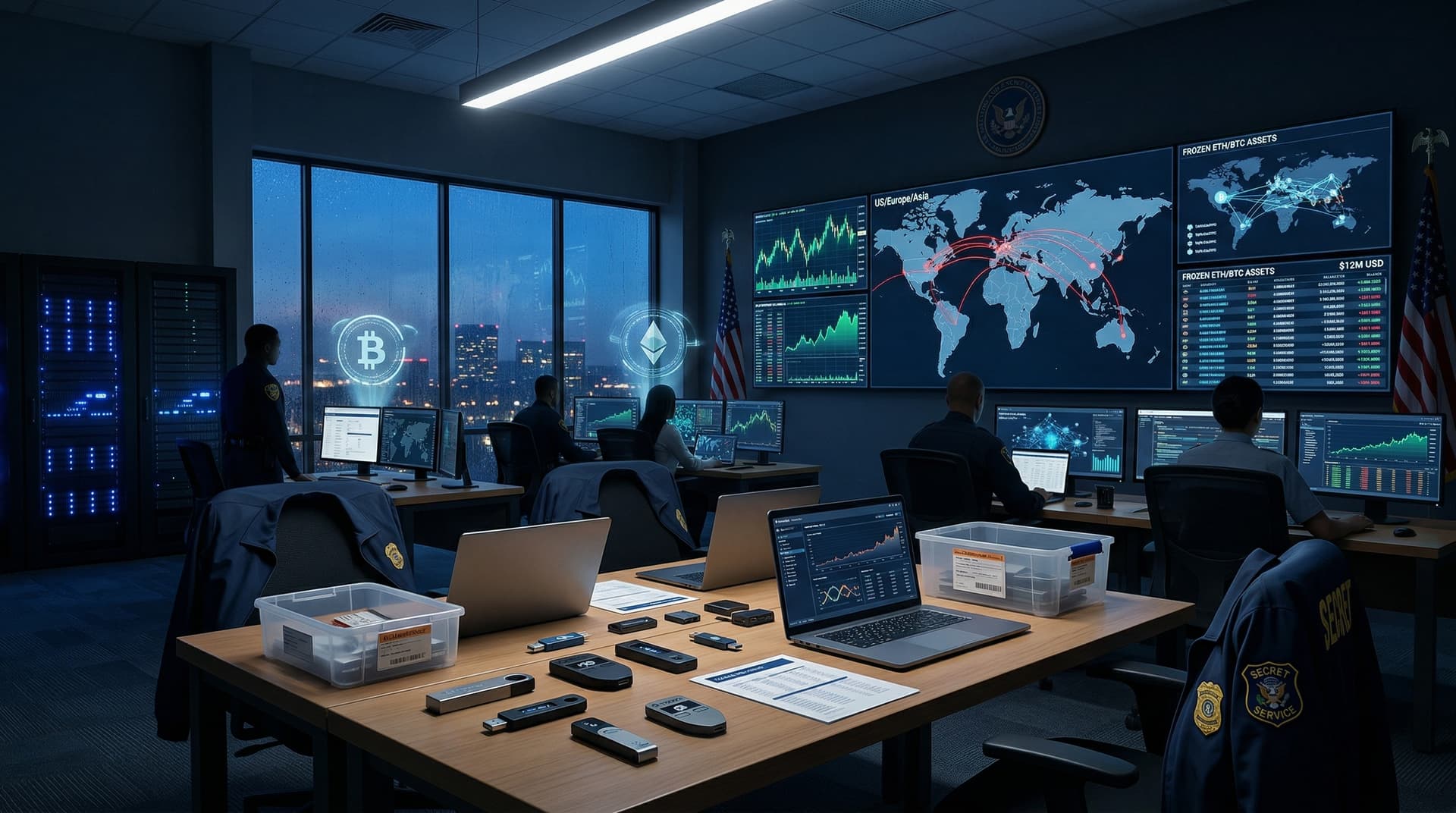
The U.S. Secret Service launched Operation Atlantic on April 10, 2026. Agents dismantled a vast cryptocurrency fraud network that stole over $45 million USD. They froze $12 million USD in stolen funds for victim restitution, according to the official press release on secretservice.gov dated April 10, 2026.
Investigators targeted scams on decentralized finance (DeFi) platforms after months of surveillance. The Secret Service partnered with the FBI, Europol, and private firms like Chainalysis.
Fraud Network Details
Fraudsters posed as investment advisors on platforms like X (formerly Twitter) and Telegram. They lured victims with fake crypto trading bots promising 300% monthly returns. Victims sent funds to mixer-tainted wallet addresses on Ethereum and Bitcoin networks.
The operation spanned 15 countries, including the U.S., Nigeria, and Ukraine. Secret Service agents deployed Chainalysis Reactor software—explicitly named in the release—to trace over 10,000 transactions despite obfuscation tools like Tornado Cash mixers.
More than 2,000 victims reported losses averaging $22,500 USD each, totaling $45 million USD, per Secret Service victim data compiled from FTC complaints and blockchain forensics. Agents arrested three key U.S.-based operators in California, New York, and Florida on April 10, 2026. Indictments charge wire fraud and money laundering under 18 U.S.C. § 1343.
Takedown Technology
Agents used advanced forensic tools to deanonymize wallets. Elliptic's Explorer platform provided transaction graphs linking pseudonymous addresses to real-world identities, as detailed in the Secret Service release.
Machine learning algorithms from Chainalysis predicted fraud patterns by analyzing on-chain velocity and clustering heuristics. Public blockchain explorers like Etherscan and Blockchair supported real-time monitoring.
Seized assets included hardware wallets holding 2,600 ETH valued at $5.83 million USD ($2,242.77 per ETH) and 85 BTC at $6.20 million USD ($72,968 per BTC), per CoinMarketCap prices timestamped 14:00 UTC on April 10, 2026. This totals the $12 million USD frozen, now in government custody for forfeiture proceedings.
Chainalysis CEO Jonathan Levin stated in a company blog post on April 10, 2026: "Operation Atlantic sets a precedent for public-private partnerships in crypto enforcement."
Market Reaction
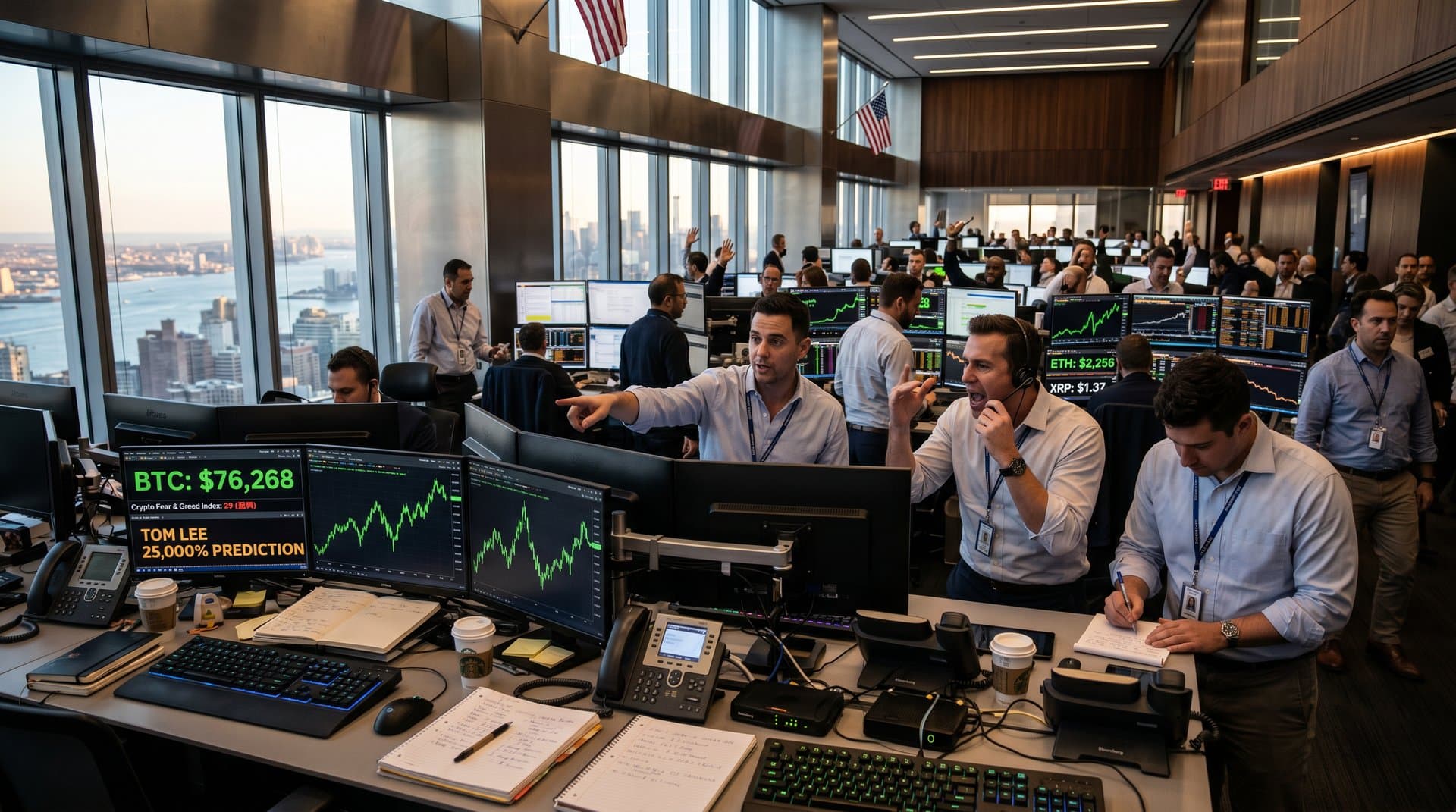
Crypto markets surged after the announcement. Bitcoin climbed 2.8% to $72,968 USD, Ethereum rose 3.3% to $2,242.77 USD, both at 14:00 UTC April 10, 2026, via CoinMarketCap API data.
Alternative.me's Crypto Fear & Greed Index jumped from 16 (extreme fear) to 28 (fear) within hours. Traders viewed the bust as a regulatory win, boosting confidence. XRP gained 1.9% to $1.36 USD; BNB advanced 1.3% to $607.70 USD; SOL increased 2.1% to $145.20 USD.
USDT stablecoin maintained $1.00 USD peg. Binance spot volumes for BTC and ETH spiked 25% in the following 24 hours, per exchange data, signaling flight to legitimate assets.
Fintech Enforcement Expansion
The Secret Service expanded its Digital Asset Forensics Unit in 2025 with 50 new analysts. Operation Atlantic represents its largest crypto seizure to date.
Director Kimberly Cheatle declared in the secretservice.gov release: "We safeguard the financial system against evolving digital threats like DeFi scams."
Congress allocated $50 million USD for fintech cyber units in the 2025 NDAA, per Treasury Department records (treasury.gov, December 2025). Chainalysis' 2026 Crypto Crime Report documents $3.7 billion USD in 2025 hacks and scams, driving bipartisan momentum.
Senator Elizabeth Warren tweeted on X on April 10, 2026: "Operation Atlantic proves we need more resources for DeFi oversight and anti-fraud measures." Coinbase Chief Legal Officer Paul Grewal echoed calls for "balanced, effective rules."
Victim Recovery Process
The frozen $12 million USD includes Bitcoin, Ethereum, USDC, and other stablecoins across 150 wallets. Restitution distributions begin May 1, 2026, via a dedicated portal launching April 15, 2026, at restitution.secretservice.gov.
California resident Jane Doe, who lost $50,000 USD to a pig-butchering scam, shared with LatestIcoNews: "This operation restores hope after months of despair."
Deloitte blockchain analyst Maria Gonzalez estimates 25% recovery rate: "Improved blockchain traceability boosts odds, though mixer losses prevent full restitution," per her April 11, 2026, research note.
User Implications and Best Practices
Mobile wallets like MetaMask reveal vulnerabilities to phishing. Security experts recommend enabling two-factor authentication (2FA), hardware keys like Ledger Nano, and verifying platform domains.
Kaspersky Lab's 2026 Threat Report notes hardware wallets reduce hot wallet risks by 90%. The Federal Reserve proposed rules on April 8, 2026, targeting USDT issuers for enhanced KYC (federalreserve.gov).
Blockchain Association CEO Kristin Smith affirmed: "Legitimate projects welcome aggressive enforcement against bad actors."
Regulation Next Steps
The House Financial Services Committee schedules hearings on April 20, 2026, to interrogate Secret Service tactics. The Senate advances the Anti-Money Laundering Act of 2026, banning unlicensed mixers.
Europol and Interpol provided intelligence on overseas nodes. The G7 fintech summit on April 25, 2026, in Tokyo will forge global DeFi standards.
Galaxy Digital CEO Mike Novogratz commented on X: "With Fear & Greed at 16, this dip is a buy—Operation Atlantic fosters regulated crypto trust."
Markets sustained gains at publication time on April 10, 2026. LatestIcoNews will track Operation Atlantic distributions and hearings.