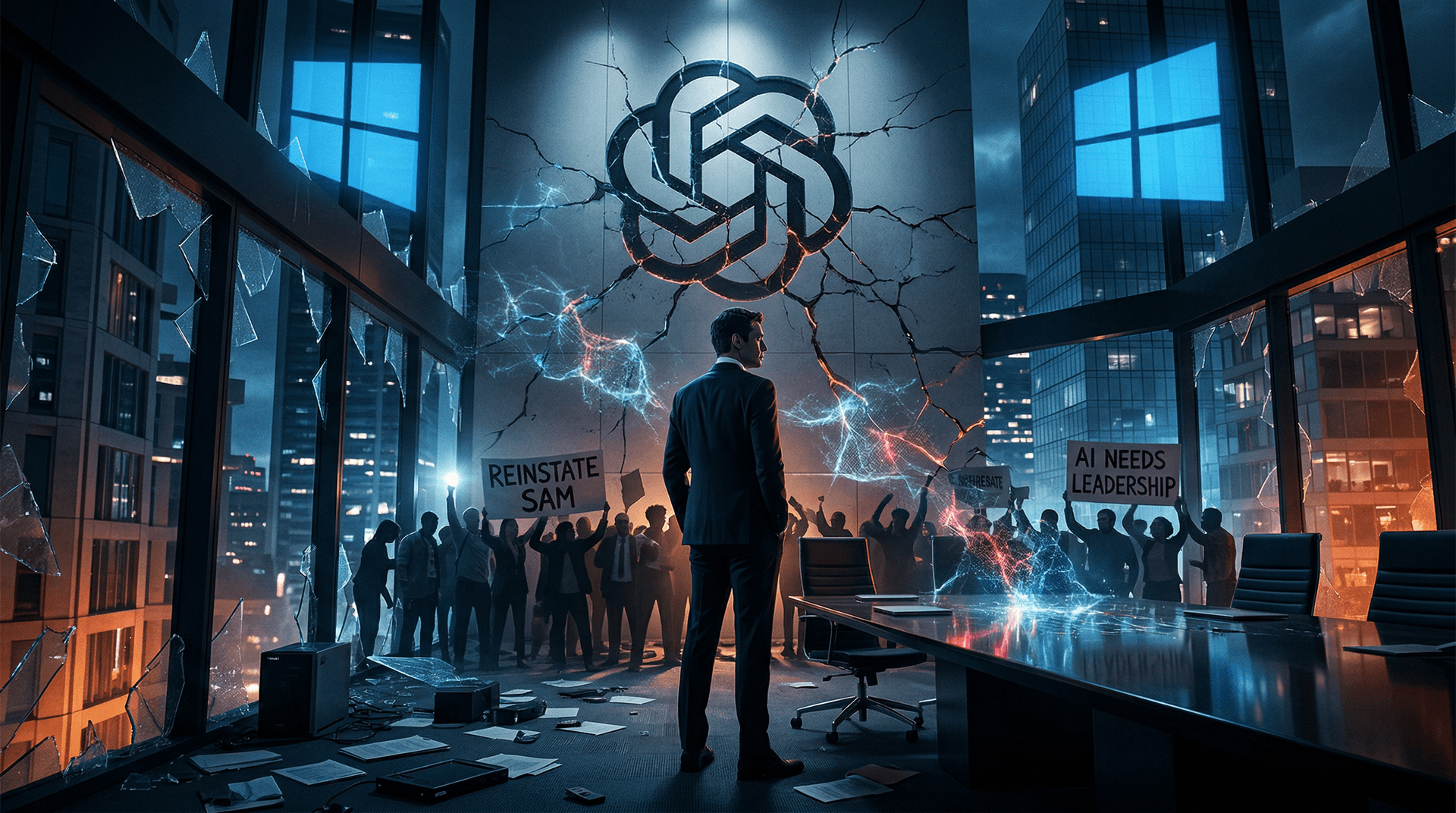
In a move that sent shockwaves through the tech industry, OpenAI's board of directors fired CEO Sam Altman on Friday, November 17, 2023. The announcement, delivered via a terse blog post, stated that Altman was removed for "not being consistently candid in his communications with the board." This unexpected purge has ignited a firestorm of reactions, from employee revolts to concerns from key investors like Microsoft, raising questions about the future of one of the world's leading AI companies.
The Announcement and Immediate Backlash
OpenAI's official statement was brief but pointed: "Mr. Altman’s departure follows a deliberative review process, which concluded that he was not consistently candid in his communications with the board." The board appointed Chief Technology Officer Mira Murati as interim CEO, with CTO Bob McGrew and President Greg Brockman—Altman's close ally—also stepping aside temporarily.
Brockman, who resigned in solidarity, posted on X (formerly Twitter): "This is not the normal kind of board review. It was a breakdown in the communication between Sam and the board." Altman himself expressed shock on X, stating he was "blindsided" and remained committed to OpenAI's mission.
By Saturday, November 18, over 700 of OpenAI's roughly 770 employees signed a letter demanding Altman's reinstatement, threatening mass resignation if the board did not comply. The letter accused the board of undermining the company's mission to ensure artificial general intelligence (AGI) benefits humanity.
OpenAI's Turbulent Path Under Altman
Founded in 2015 as a nonprofit to advance AGI safely, OpenAI transitioned to a "capped-profit" structure in 2019, attracting massive investments. Under Altman, the company skyrocketed to fame with ChatGPT's launch in November 2022, amassing 100 million users in two months and valuing the firm at $86 billion in recent funding rounds.
Altman's leadership blended aggressive innovation with controversy. Releases like GPT-4 and DALL-E propelled AI into mainstream use, but drew scrutiny over safety, ethics, and compute demands. Tensions reportedly simmered between Altman's push for rapid commercialization and the board's nonprofit roots, including members like Ilya Sutskever (Chief Scientist) and Helen Toner (Georgetown AI researcher).
Recent events amplified strains. OpenAI's October safety report highlighted risks in advanced models, and Altman's side ventures—like Worldcoin—drew ethical questions. Insiders whisper of board concerns over Altman's undisclosed activities and communication lapses during key decisions.
Microsoft's Pivotal Role and Industry Ripples
Microsoft, OpenAI's largest backer with a $13 billion investment, looms large. CEO Satya Nadella voiced disappointment, hinting at contingencies. Reports emerged of Microsoft preparing to hire Altman and key engineers, potentially absorbing OpenAI's talent into Azure AI.
The partnership, exclusive for cloud services, faces uncertainty. OpenAI relies on Microsoft's infrastructure for training massive models, and any fracture could disrupt Copilot integrations across Office, Bing, and GitHub.
Competitors watched gleefully. Anthropic, backed by Amazon, and xAI (Elon Musk's venture) positioned themselves as stable alternatives. Google DeepMind and Meta AI, already investing billions, could capitalize on OpenAI's chaos.
Employee Revolt and Governance Questions
The employee letter, circulated internally, labeled the firing a "power grab" by a small board lacking technical expertise. Signatories included top researchers, underscoring Altman's cult-like following. Sutskever's vote for removal reportedly regretful, he liked supportive posts on X.
Governance critiques abound. OpenAI's hybrid structure—nonprofit board overseeing for-profit arm—breeds conflicts. The four-person board (pre-firing: Altman, Brockman, Sutskever, Toner) excluded investors, fueling accusations of misalignment.
Toner's past criticisms of OpenAI, including a 2023 paper faulting secrecy, suggest ideological clashes. Brockman's exit as board chair amplified instability.
Implications for AI's Future
This crisis arrives at AI's inflection point. With GPT-5 rumors and multimodal models on horizon, leadership voids risk stalling progress. Safety debates intensify: board prioritized caution, while Altman championed speed.
Economically, OpenAI's $3.5 billion projected 2024 revenue hinges on stability. Investors like Thrive Capital and Sequoia may push reforms.
As of November 20, negotiations continue. Altman met board members; Murati addressed staff, promising transparency. Microsoft hosted talks, per reports.
What Comes Next?
Reinstatement seems plausible amid revolt, but trust erosion lingers. A new board with investor reps could emerge, balancing profit and safety.
Altman's next chapter? A Microsoft role or startup seems likely, given his network. For OpenAI, survival depends on retaining talent and mission fidelity.
This saga underscores AI's high stakes: power, ethics, and humanity's future collide. As developments unfold, the industry holds breath.
(Word count: 912)