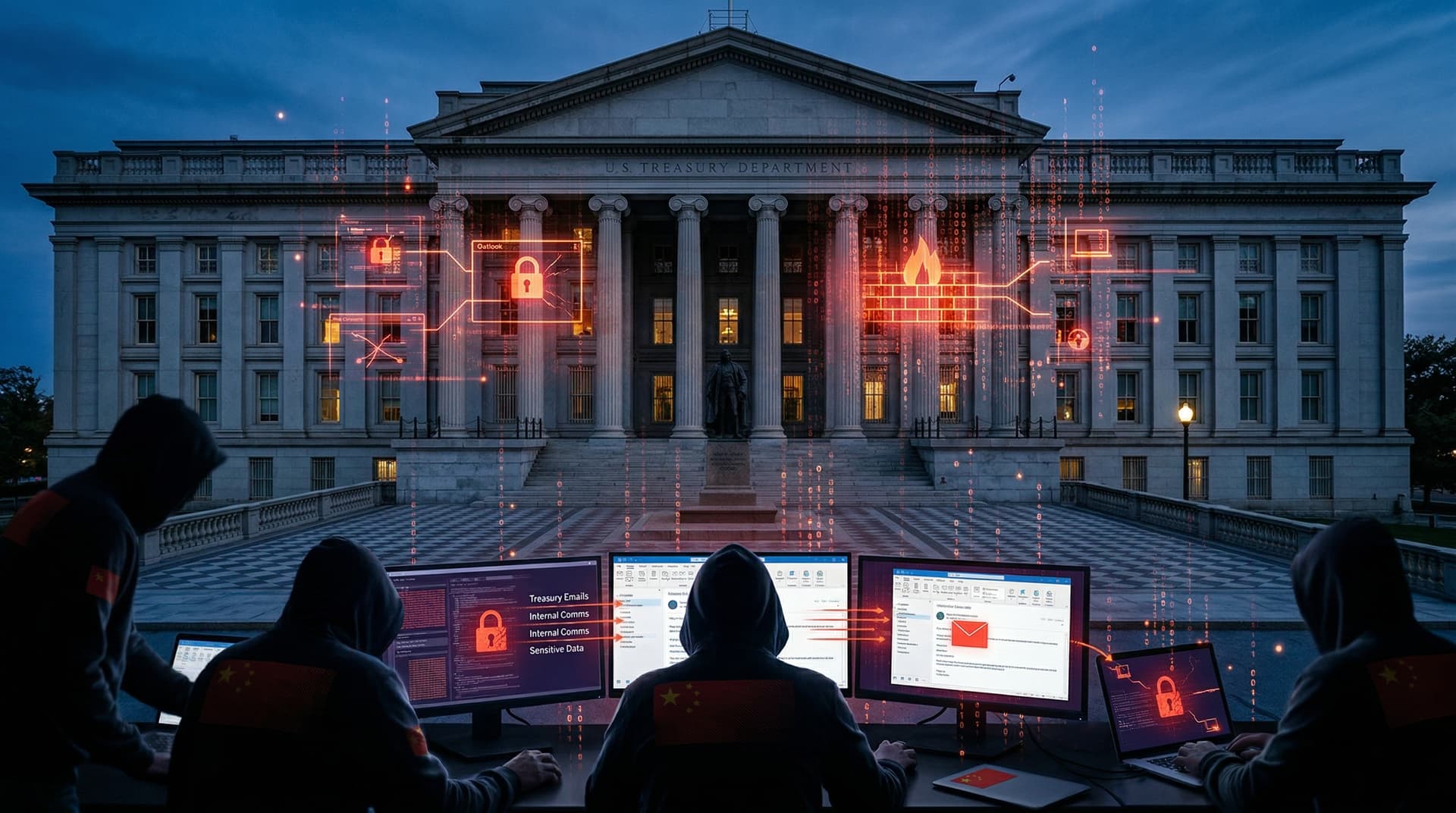
In a stark reminder of the persistent cyber threats posed by nation-state actors, the US Department of the Treasury has disclosed a significant breach of its unclassified email system. On January 4, 2024, the agency revealed that hackers linked to China accessed approximately 3,000 employee email accounts for several weeks late last year. The intrusion, which exploited a vulnerability in Microsoft software, did not compromise classified information but has raised alarms about the security of federal IT infrastructure.
Timeline of the Breach
The breach came to light through Microsoft's proactive detection efforts. According to Treasury officials, Microsoft notified the department in December 2023 that a China-based threat actor had exploited a zero-day vulnerability in the Outlook web application, part of the Microsoft 365 suite. This flaw allowed unauthorized access to email data without valid credentials.
Treasury's statement indicated that the hackers had been inside the network since at least late November 2023. Upon notification, the department immediately isolated affected systems and launched an investigation in coordination with the Cybersecurity and Infrastructure Security Agency (CISA) and the FBI. By early January, the intrusion was fully contained, with no evidence of data exfiltration beyond the emails themselves.
"We moved quickly to revoke access and secure our systems," a Treasury spokesperson said. "While no classified or highly sensitive information was involved, this incident underscores the sophisticated nature of advanced persistent threats (APTs)."
Technical Details: The Microsoft Vulnerability
The attack vector was a sophisticated exploit targeting a flaw in Microsoft's cloud-based email service. Cybersecurity experts believe it was a zero-day vulnerability that Microsoft patched in December 2023 as part of its monthly security updates (CVE details are still under review by Microsoft). The hackers used this to bypass authentication and read emails from key Treasury offices, including those involved in sanctions enforcement and economic policy.
This isn't the first time Microsoft products have been at the center of nation-state espionage. In 2023, Chinese groups exploited vulnerabilities in Exchange Server and other services to target US entities. Analysts from Mandiant and CrowdStrike have attributed similar tactics to groups like Salt Typhoon (though not officially named in this case), known for targeting telecommunications and government sectors.
"The reliance on third-party cloud providers introduces supply chain risks," said Dmitri Alperovitch, co-founder of CrowdStrike. "Even patched systems can be vulnerable if updates aren't applied promptly. Government agencies must prioritize zero-trust architectures."
US-China Cyber Tensions Escalate
This breach occurs against a backdrop of intensifying cyber rivalry between the US and China. The Biden administration has repeatedly accused Beijing of sponsoring hacks aimed at stealing intellectual property and intelligence. Notable incidents include the 2021 Microsoft Exchange hacks attributed to Hafnium (Chinese state actors) and recent intrusions into US telecom firms.
In response, the US has ramped up offensive cyber operations and sanctions. Just last year, the Treasury designated several Chinese entities under Executive Order 13694 for malicious cyber activities. Critics argue that defensive measures lag behind, with federal agencies still using legacy systems vulnerable to exploits.
The incident also draws parallels to the 2020 SolarWinds supply chain attack by Russia's SVR, which compromised nine federal agencies including Treasury. That event prompted the 2021 Executive Order on Improving Cybersecurity, mandating multi-factor authentication and software bills of materials (SBOMs).
Treasury's Response and Mitigation
Treasury acted decisively:
- Immediate Isolation: Affected Outlook accounts were taken offline.
- Forensic Analysis: Engaged third-party experts to scan for persistence mechanisms like backdoors.
- User Notifications: Employees informed; credentials reset across the board.
- Patch Deployment: Ensured all Microsoft 365 instances are fully updated.
CISA issued an emergency directive urging all federal agencies to apply the relevant patches and hunt for similar indicators of compromise (IOCs). The FBI is leading attribution efforts, with high confidence in Chinese state sponsorship based on tactics, techniques, and procedures (TTPs).
No evidence suggests the hackers pivoted to other systems or stole financial data, a relief given Treasury's role in managing sanctions against Russia, Iran, and others. However, the exposure of internal communications could reveal insights into US policy deliberations.
Broader Implications for Cybersecurity
This event exposes systemic vulnerabilities: 1. Cloud Dependency: 90% of federal workloads are shifting to cloud, per GAO reports, but configurations often lag. 2. Patch Management: Delays in applying updates remain a top breach cause, per Verizon's 2023 DBIR. 3. Nation-State Focus: APTs now target email for spear-phishing and intel gathering, not just ransomware.
Experts call for:
- Enhanced endpoint detection and response (EDR).
- Zero-trust models per NIST 800-207.
- International norms, though enforcement is challenging.
"We can't build a digital Maginot Line," noted Jake Williams, CTO at Hunter Strategy. "Attribution is key, but deterrence requires public-private partnerships and offensive capabilities."
Microsoft, in a blog post, confirmed the vulnerability affected a small number of customers globally and emphasized its Threat Intelligence Center's role in disruption. The company is providing advanced hunting queries to help organizations detect similar activity.
Looking Ahead: Strengthening Defenses
As of January 9, 2024, investigations continue, with Treasury committing to a full after-action report. This breach serves as a wake-up call for all sectors. Private companies, especially in finance and critical infrastructure, should audit Microsoft 365 configurations and monitor for IOCs shared by CISA.
In an era of hybrid warfare, cybersecurity is national security. The US must invest in resilient architectures while holding adversaries accountable. Failure to do so risks more intrusions, eroding trust in digital government services.
This incident won't be the last, but a robust response can turn vulnerability into strength.
Word count: 912